
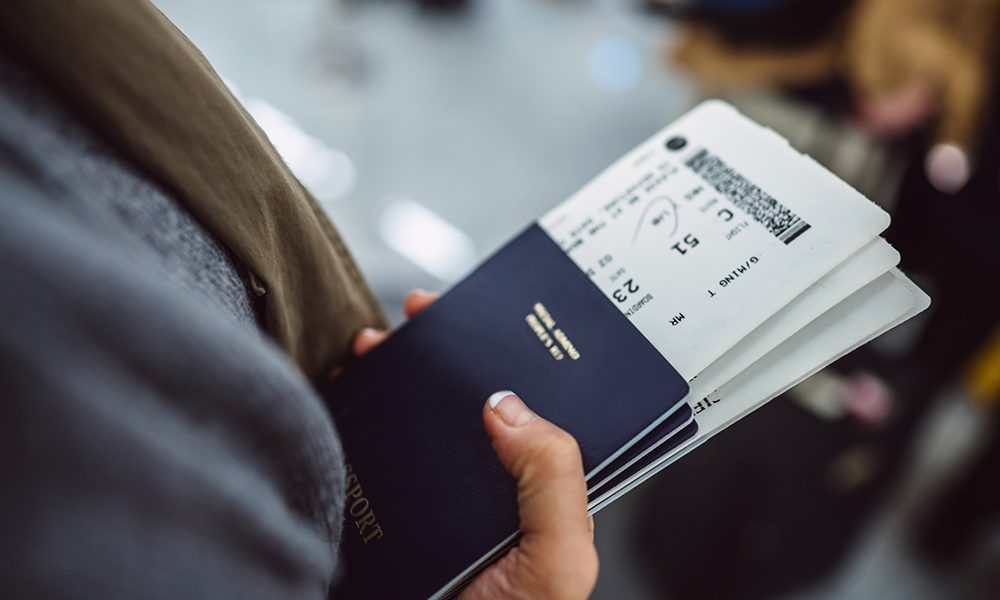
Business travel grows despite new UK and Europe entry rules
Brisbane, Australia, 4 February 2026 – Australian businesses are pushing ahead with UK and European travel plans despite a wave of new entry requirements. Corporate Traveller data shows bookings to the UK jumped nearly 14 per cent in the second half of 2025 compared to the same period in 2024, following stricter rules that took effect in January 2025.
The growth comes as Australian passport holders now navigate a trio of systems: the UK's Electronic Travel Authorisation (ETA), which became mandatory in January 2025, the EU's Entry/Exit System (EES) that launched in October 2025, and the European Travel Information and Authorisation System (ETIAS) expected to roll out in late 2026.
Rather than deterring travel, these changes are reshaping how businesses approach international trips. In its latest travel manager survey, Corporate Traveller, the SME specialist of Flight Centre Travel Group, found that 54 per cent identified traveller education as the biggest challenge with the new entry requirements – not the systems themselves.
"This is one of a number of modifications that have either just been introduced or are being rolled out in the coming months. The data tells us something important: businesses recognise that travel to these regions remains essential," says Tom Walley, Global Managing Director of Corporate Traveller.
"Entry requirements are becoming more complex, and they're evolving constantly. Companies that partner with a travel management company have someone keeping track of every update, ensuring travellers aren't caught out, and with the ETA similar to the ESTA in the USA, travellers should be well-equipped to navigate the changes."
The trend toward professional travel management aligns with broader passenger attitudes. IATA's 2025 Global Passenger Survey found 74 per cent of travellers are willing to use biometric technology at airports, with Asia Pacific passengers leading adoption (55 per cent versus 50 per cent globally) – suggesting the technology is not the barrier, but rather knowing how to navigate it.
What Australian business travellers need to know
UK’s ETA will become mandatory for boarding; dual citizens face new requirements
Australians have been able to apply for a UK Electronic Travel Authorisation (ETA) since January 2025, but from 25 February 2026, it will become mandatory for boarding. Airlines will be legally required to verify ETA before allowing travel for short visits, including tourism, business and transit. The authorisation is valued at £16 for the moment and is valid for two years with multiple entries.
Travellers who already hold a UK visa or have permission to live, work or study in the UK do not need an ETA.
Dual citizens with British or Irish citizenship are not eligible for an ETA and must prove citizenship using a valid British or Irish passport. Although a grace period has been in effect since January 2025, enforcement will be strict from 25 February 2026.
From 25 February 2026, those with dual citizenship will need to prove it using either a current, valid UK or Irish passport, or a Certificate of Entitlement. Travellers with dual citizenship must carry and present both valid passports (or valid Certificate of Entitlement) while travelling.
For further information about your travel documentation requirements for dual citizens, visit the official website or contact your dedicated travel manager.
Europe launched biometric border checks, with pre-travel authorisation coming late 2026
The Entry/Exit System (EES) replaced passport stamps with digital biometric checks from October 2025. First-time registration involves a face scan and fingerprints at the border, adding 3–7 minutes to processing. Subsequent entries are faster.
Meanwhile, the European Travel Information and Authorisation System (ETIAS) is scheduled to be in operation in late 2026. ETIAS will require Australians to apply online for pre-travel authorisation before visiting any Schengen country. The €20 permit will be valid for three years and aims to pre-screen visitors from visa-exempt nations.
China extends visa-free entry through 2026
China has extended its 30-day visa-free entry for 45 countries, including Australia, to 31 December 2026 for business, tourism, family visits and transit.
South Korea waives K-ETA but mandates e-Arrival card
The K-ETA has been waived for Australian passport holders until 31 December 2026 for tourism and short business trips. Meanwhile, the e-Arrival Card became mandatory as of 1 Jan 2026, replacing the traditional paper forms.
USA tightens biometric and social media requirements
Biometric data collection became mandatory for all non-citizens from 26 December 2025. ESTA applications now require five years of social media history, 10 years of email and phone records, plus biometric identifiers.
Thailand doubles visa-free stay to 60 days
Visa-free stay has been extended to 60 days (up from 30). Travellers must hold a passport valid for at least six months from the time of entry and also complete a mandatory Thailand Digital Arrival Card (TRAC) within three days before arrival.
"Entry and exit conditions can change at short notice," Walley adds. "Having a reliable travel partner keeps travellers safe and informed, so they're across the latest developments before they board a plane."
Corporate Traveller advises businesses to verify visa requirements directly with the relevant government agency website and be alert to scam sites that capitalise on changing regulations. When in doubt, speak to your travel adviser.