
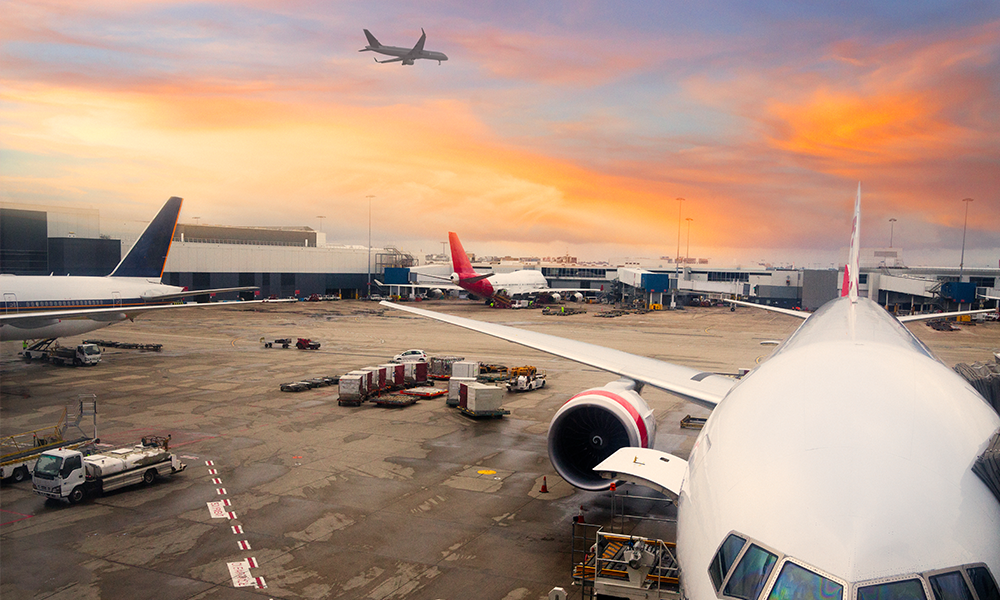
Major Australian airport upgrades set to transform travel in 2026
Brisbane, Australia, 14 January 2026 – Australian travellers can expect significantly faster, smoother and more sustainable airport journeys in 2026, as the nation's major airports roll out transformative upgrades worth billions of dollars.
With business travel demand expected to remain steady, new research from Corporate Traveller, the flagship SME division of Flight Centre Travel Group (FCTG), reveals how business travellers are moving through airports and what matters most when time is tight:
- Sydney Airport rated most convenient for ground transport (53.7 per cent)
- Monday is identified as the most popular travel day (54.2 per cent)
- Two-day trips are the most common length for domestic business travel.
The survey found Brisbane Airport leads the nation for rideshare accessibility (32 per cent), whilst Sydney Airport tops overall ground transport convenience (53.7 per cent) and train connectivity (63 per cent) – all areas set for significant upgrades in 2026.
Corporate Traveller Global Managing Director Tom Walley said the upgrades addressed what corporate travellers need.
"People travelling for business want to get from the plane to their meeting, conference, or event as quickly as possible – there's no room for delays when most trips are scheduled around weekday commitments," Mr Walley said.
"The strong preference for rideshare tells us flexibility and door-to-door convenience really matter. The inbound upgrades will genuinely remove friction from the entire journey."
Here's what business travellers can expect at the major Australian airports:
Brisbane Airport unveils laptop-in-bag screening and streamlined Skywalk access
Brisbane Airport (BNE) has opened a new entrance to its domestic terminal, allowing business travellers with carry-on only to walk straight from the Skywalk into the new mezzanine screening area with 10 lanes – no need to remove laptops, drink bottles or aerosols from bags.
The new northern screening point for Qantas passengers also adds five more security lanes, significantly reducing wait times.
“We’re incredibly excited to have opened our new entry to our Domestic Terminal, which sets a benchmark for a smoother passenger experience at Brisbane Airport,” said Brisbane Airport CEO Gert-Jan de Graaff.
The $5 billion Future BNE transformation includes a major Skywalk upgrade that directly connects the domestic terminal to parking and vehicle pick-up areas, meaning less walking with luggage and faster transfers to rideshare vehicles – building on Brisbane's position as the nation's leader for rideshare accessibility, rated highest by 32 per cent of travel managers.
The improvements in domestic and international terminals reflect the airport's commitment to continuous enhancement as the city gears up for the 2032 Games.
“Over at the International Terminal, travellers will see significant enhancements to security screening, and a refreshed retail experience will be unveiled later this year,” Mr de Graaff said.
“We know construction can be disruptive, and I want to thank passengers for their patience. Every upgrade we’re delivering through our $5 billion Future BNE transformation is about building a better airport, today and into the future.”
Sydney Airport targets 15-minute kerb-to-gate processing
Sydney Airport, rated as offering the most convenient ground transport overall by 54 per cent of travel managers, is investing $200 million in its domestic terminal transformation (T2/T3) in 2026, introducing faster self-service kiosks and bag-drops with seven CT-equipped lanes that target processing 95 per cent of passengers from kerb to gate in under 15 minutes.
As for city-bound travellers, a groundbreaking fixed-fare trial is already underway for taxi trips to the CBD, with standard taxis charging a flat $60 and maxi taxis capped at $80. The initiative eliminates fare uncertainty and surprise tolls when rushing from a meeting to catch a flight.
A new fleet of seven electric buses is expected to begin operations in early 2026 for quieter, greener apron transit at T1.
Western Sydney International opens late 2026 with integrated metro connectivity
Set to open in late 2026, Western Sydney International (WSI) will deliver new business travel connectivity with rail services via Sydney Metro – Western Sydney Airport, featuring two on-site stations at the terminal and business precinct.
Bus connections from Penrith, Liverpool and Campbelltown will be ready for the airport's opening, with the rail line expected by April 2027, offering predictable travel times that business travellers can plan around.
Melbourne Tullamarine Airport doubles baggage capacity from March 2026
Melbourne Airport will introduce a $500 million tote-based baggage system in March 2026, doubling capacity to 4,000 bags per hour and enabling business travellers to check bags earlier in the day, with real-time tracking from check-in to take-off.
The system's automated bag store will hold up to 1,400 bags before dispatching them when aircraft are ready to load, reducing terminal wait times and paving the way for true anytime check-in.
A new elevated road network in 2026 will support expanded check-in and passenger circulation, with satellite terminal planning underway for up to five additional widebody gates, lounges and retail facilities.
Adelaide Airport expands check-in space by 25%
Adelaide Airport's $600 million Project Flight will expand the southern check-in hall by 1,500 square metres (25 per cent) and introduce six new CT screening lanes, reducing congestion during peak travel periods.
The airport's strong reputation – rated highly by 22 per cent of travel managers for taxi accessibility – will be enhanced by the north terminal expansion, commencing in 2026, which will add 10,000 square metres of new lounges, gates and aerobridges where business travellers can work comfortably before flights.
The southern expansion will add 5,500 square metres in 2027, with up to nine additional aircraft stands reducing tarmac delays.
Perth Airport introduces six-level multi-modal transport hub
Perth Airport will deliver its One Airport Central development in 2026, featuring a six-level multi-modal car park with dedicated rideshare, taxi and bus zones, plus EV pick-up and drop-off facilities. A pedestrian Skybridge will provide weather-protected access to Terminal 1.
Multi-stage terminal works include a T2 domestic upgrade and a T1 international smart terminal with improved business facilities, whilst a new runway expected in 2028 will reduce delays. The city's appeal – rated favourably for its weather and climate – makes it an attractive destination for extended business trips.
Canberra Airport completes $350 million redevelopment
The nation’s capital airport has completed its $350 million terminal redevelopment with a new concourse, elevated roads for faster drop-offs, enhanced parking and an upgraded baggage system that processes bags more efficiently.
The improvements support the city's reputation for business-friendly operations, with 19 per cent of travel managers rating Canberra as having a favourable regulatory environment – ideal for government and public sector meetings.
Ground transport planning includes a completed Majura Parkway slip road for quicker airport access, with a future high-speed rail corridor identified through the Majura Valley.
Gold Coast Airport masterplan targets growth to 13 million passengers by 2044
Gold Coast Airport's 2024 Master Plan, approved in June 2025, includes a public transport plaza with rail and light rail integration, on-site hotels for overnight business stays, and a conference and technology hub for meetings without leaving the airport precinct.
Terminal expansion will accommodate growth from six million to 13 million passengers by 2044, whilst the destination's strong appeal – rated favourably by 35 per cent of travel managers for weather and climate and 27 per cent for restaurant and café offerings – makes it perfect for the three out of four business travellers who occasionally extend trips for leisure.