
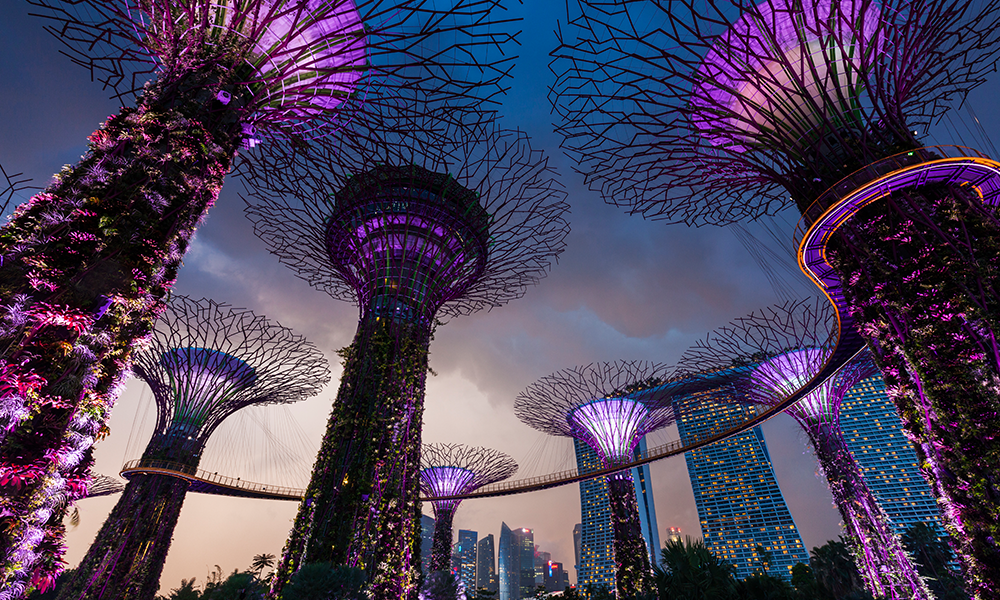
Singapore soars as the main artery between Australia and Europe
As regional airspace closures continue and the Middle East conflict disrupts traditional flight paths, business continuation proves essential to the health of national and global economies. Right now, Singapore operates as the main artery between Australia and Europe.
New figures from the flagship business travel divisions of Flight Centre Travel Group, Corporate Traveller and FCM Travel, show a strong, swift response from customers as they shift travel patterns.
Australia-Europe bookings via Singapore surge 38%
The fresh statistics show that booking volumes between Australia and Europe via Changi – the world’s fourth busiest airport with 42.6 million seats in 2025 – soared by 38% between Monday 2nd March, and Sunday 15th March, compared with the two weeks prior.
This growth highlights the importance of flexible corporate travel in keeping things moving during international disruptions. The ability to keep businesses moving – despite geopolitics and disrupted air routes – remains critical to the stability of both local and global economies.
Singapore Airlines restores the A380 to Melbourne
To meet this surging demand, Singapore Airlines is bringing its flagship Airbus A380 back to Melbourne. This represents a substantial capacity boost as corporate travellers increasingly reroute through Singapore amid Middle East disruptions.
The airline will restore A380 services seasonally from 29th March through October 2026, swapping out the smaller Boeing 777-300ER currently on the SQ228 and SQ237 services. The A380 last operated on the Singapore to Melbourne route during the northern summer 2023 season.
The aircraft upgrade comes as Singapore Airlines extends its Singapore-Dubai suspension until at least 30th April 2026, citing ongoing geopolitical uncertainty in the region. When regional disruptions affect traditional flight paths, corporate travellers adapt quickly by seeking reliable alternatives, and Singapore has emerged as a preferred transit hub.
Capacity increase and premium cabin enhancements
The 471-seat A380 replaces a 264-seat Boeing 777-300ER on the daily SQ228 and SQ237 Melbourne services. This adds 78% more seats to the route.
The aircraft upgrade delivers premium cabin enhancements, with the A380 featuring Singapore Airlines' Suites product and 2017 Business Class offering. Passengers already booked in First Class between 29th March and 24th October will automatically experience the Suites product.
Singapore Airlines now operates three daily A380 services to Australia, with two to Sydney and one to Melbourne, reinforcing capacity to the region during elevated demand.
Corporate travel adapts to airspace restrictions
Companies are adapting rapidly, channelling business traffic through resilient flight corridors to protect economies, safeguard supply chains, and maintain vital connections. This swift response keeps seats filled, fuels growth, protects jobs, and gives markets the confidence they need to operate, even in periods of uncertainty.
“Business travel is known for its resilience and flexibility, with companies looking at alternative routes that are safe to travel through, rather than cancelling. Global economies don’t stop, and the latest data shows that corporates continue to find ways to get deals done through alternative routes.
“The majority of Europe to Australia flight connections operate via Asian hubs, including Singapore and other regional airports, with these routes continuing to operate normally,” said Melissa Elf, Global COO, FCM Travel and Corporate Traveller.
Travel experts navigate limited seat availability
Corporate travel managers face shifting inventory on these alternative routes. These conditions require rapid decision-making, global policy standardisation, and agile program design.
“Travel managers and passengers should note that seat availability on these alternative routes is limited and subject to rapid change. Securing a booking early is essential,” Elf adds.
Travel programs help access diverse inventory systems and resolve ticketing complexities. This infrastructure helps travel managers, and in turn their passengers, navigate regional disruptions.
“As a travel management company, we continue to assist as we can access different inventory systems, manage re-bookings, and handle ticketing complexities, significantly easing the burden on travellers and their companies,” Elf added.